

Updated: September 2026
Autumn is the moment for a quick check: run a finger along the rim of your heel, and if you feel a hardened edge or any tightness, start care now, while the cracks are still superficial. Skin repairs more slowly in the cold months, so regularity matters more than the amount of cream.

Foot care is often the last thing on our daily beauty routine — until the skin starts sending clear signals of discomfort. The condition known as cracked heels affects millions of people around the world and is far from a purely cosmetic concern. In this detailed guide we look in depth at why this problem occurs, how to recognise the hidden factors behind it, and what the most lasting and natural ways are to restore softness to the skin.
- What are cracked heels?
- What are the symptoms of cracked heels?
- What causes cracked heels?
- Natural remedies for cracked heels: tradition and nature
- How to choose an effective cream for cracked heels: ingredients that matter
- Natural solution and complete care: the InaEssentials story
- Frequently asked questions (FAQ)
1. What are cracked heels?

The skin on our heels is, by its very nature, thicker and less elastic than skin elsewhere on the body. It is designed to withstand serious mechanical strain — bearing the full weight of the body during walking, running, and prolonged standing. When this area loses its natural moisture, however, it also loses its ability to stretch under pressure. As a result, small linear breaks form at the surface which, over time, can deepen.

If not addressed in time, these fine lines develop into more visible cracks. Because our feet are in constant contact with the environment, maintaining an optimal moisture balance in this area requires consistent effort and the use of targeted products that nourish the skin deeply.
What are the symptoms of cracked heels?

Cracked heels rarely appear suddenly – they develop gradually, sending a series of signals we often ignore. Recognising these signs early is the key to preventing painful, deep fissures. Here are the main physical signs to watch for:
- Excessive dryness and flaking: The skin loses its glow, looks ashy and starts to flake easily into small scales when touched.
- Thickening and hardening (hyperkeratosis): A dense, hardened layer of dead cells builds up around the edges of the heel, often taking on a whitish, yellowish or dark-brown shade.
- Itching and a feeling of tightness: Because the soles lack natural lubrication, the heavily dehydrated tissue loses its flexibility, causing an unpleasant feeling of tightness when walking, accompanied by itching.
- Surface cracks (fissures): The first fine, visible grooves appear on the skin; they do not bleed yet but become very sensitive and rough against clothing and footwear.
- Deep, painful cracks: At an advanced stage, the fissures break through the epidermis and reach the living layers. Every step becomes very uncomfortable and the area turns very sensitive.
2. What causes cracked heels?

To address the problem effectively and lastingly, we first need to understand what causes it. The causes can be found in both external factors and the body's internal condition. Here are the most common sources of the problem:
- Lack of moisture and dehydration: Unlike other areas, the skin on the feet has no sebaceous glands and relies entirely on sweat glands for moisture. If we do not drink enough water, or if the air is too dry, the skin in this area dries out and hardens quickly.
- Prolonged standing and unsuitable footwear: Spending many hours on your feet, especially on hard surfaces, increases mechanical pressure on the heel's fat pad. Open-backed footwear (flip-flops, sandals) allows the fatty tissue beneath the heel to spread outward, which further stretches the dry skin and leads to splits.
- Seasonal climate changes: In summer, high temperatures, dust, and going barefoot can literally draw moisture from the feet. In winter, heavy closed footwear combined with synthetic socks can disrupt natural ventilation and cause dryness.
- Internal deficiencies: Low levels of key micronutrients and vitamins (such as vitamin E, vitamin A, and Omega-3 fatty acids) directly affect the skin's elasticity and its ability to regenerate.
3. Natural remedies for cracked heels: tradition and nature

The search for an effective remedy for cracked heels has occupied people for centuries. Before the advent of modern cosmetics, folk medicine relied entirely on the power of plants and botanical extracts — many of them rooted in Bulgarian herbal tradition. Today, science confirms that the right combination of these gifts from nature can deliver remarkable results without the need for harsh synthetic ingredients.
Among the most valuable plant extracts with recognised benefits for the feet are:
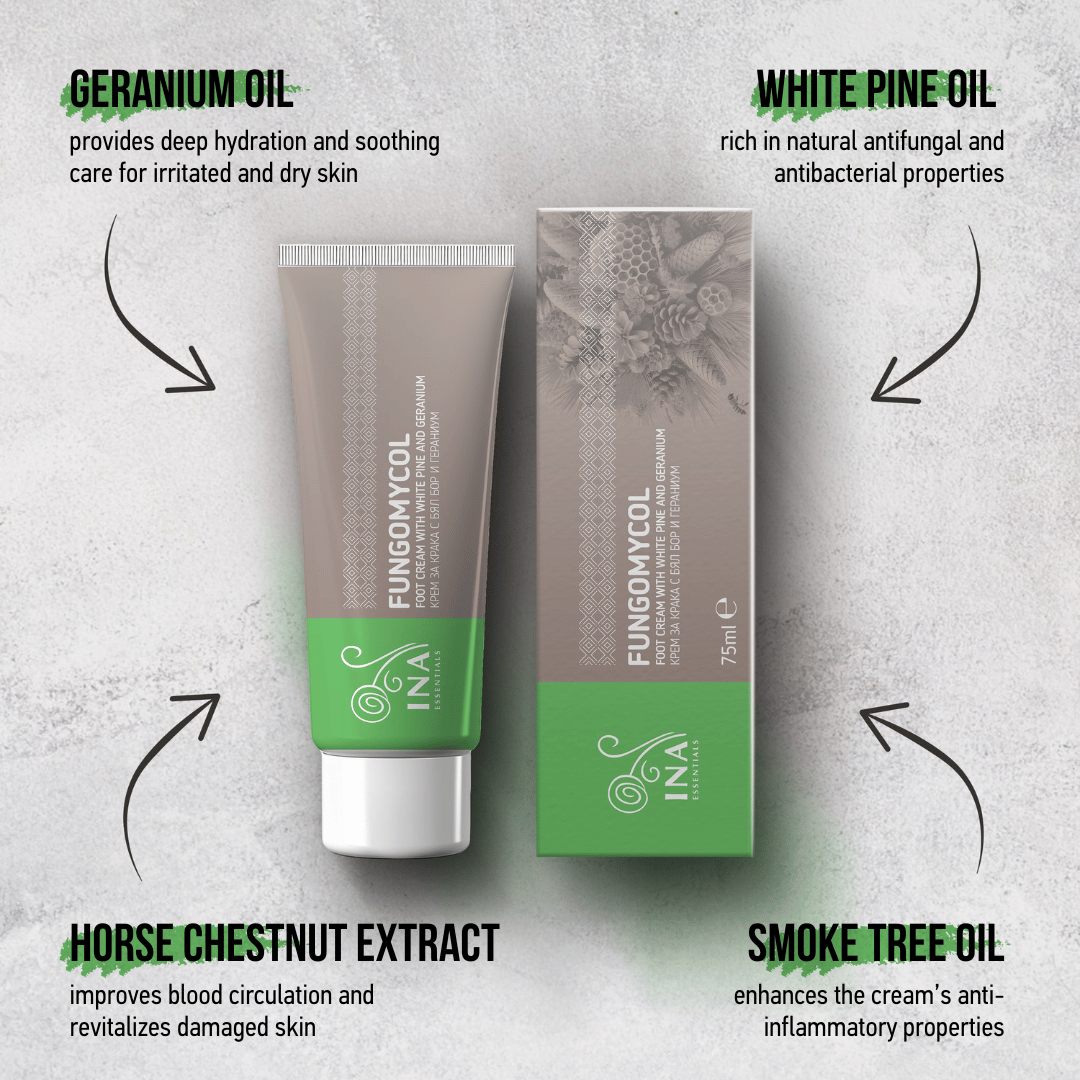
This potent natural ingredient not only cares for the freshness of the skin around the toes and toenails, but also effectively neutralises unpleasant odour, leaving a lasting sensation of cleanliness and comfort.
Deeply soothes dry skin and improves its elasticity. Thanks to its natural properties, it eases the discomfort caused by small cracks and helps prevent further splitting and deep dehydration.
Well-regarded in traditional herbal practice for its powerful soothing properties. Smoke tree oil enhances the beneficial effect of the care routine, supports rapid recovery of the skin's surface layer, and quickly soothes the discomfort associated with dry, cracked areas.
Rich in active constituents, it helps to nourish and revitalise the skin, restoring its vitality and natural freshness.
4. How to choose an effective cream for cracked heels: ingredients that matter

When skin is severely affected, ordinary body lotions are not enough. To find a truly effective cream for cracked heels, you need to pay close attention to the product's composition. The formula must combine intensive moisturising agents that penetrate the thick outer layer with nourishing components that seal moisture into the skin.
One of the most highly regarded ingredients in foot cosmetics is urea. Known for its deeply moisturising action, urea supports intensive hydration of the skin, leaving it soft and supple. It is particularly useful for cracked heels and elbows because it supports the skin's natural restorative processes and prepares it for better absorption of other active and natural ingredients.
For maximum effect, urea and botanical extracts should be combined with regenerating agents such as panthenol (pro-vitamin B5), for soothing and recovery, and lavender oil, for additional protection and relief of areas prone to dryness.
Our recommended natural solution and effective cream for cracked heels:

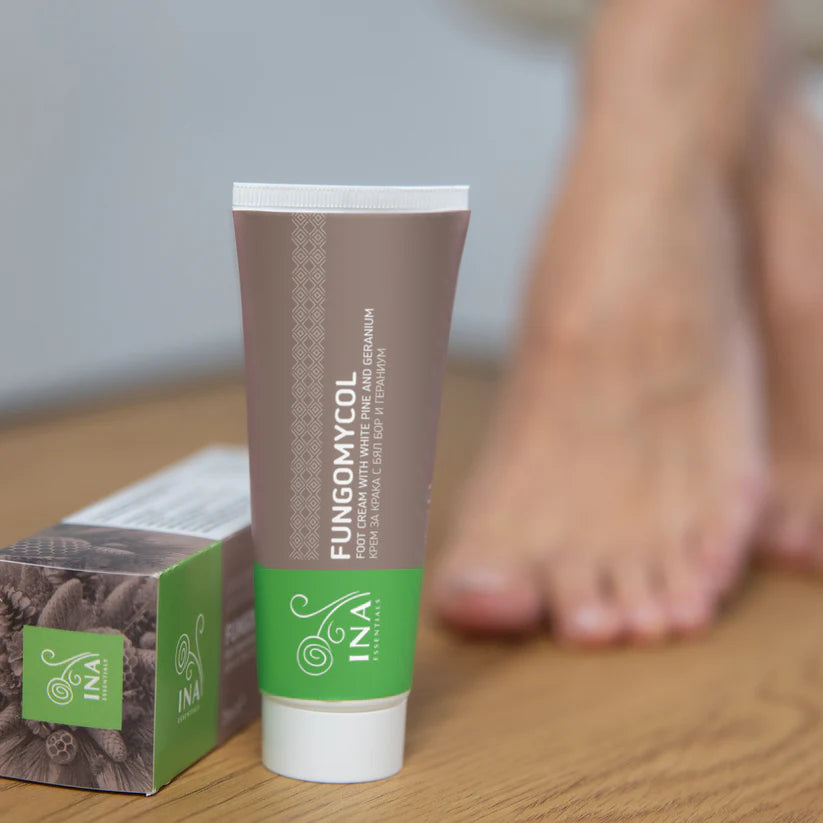
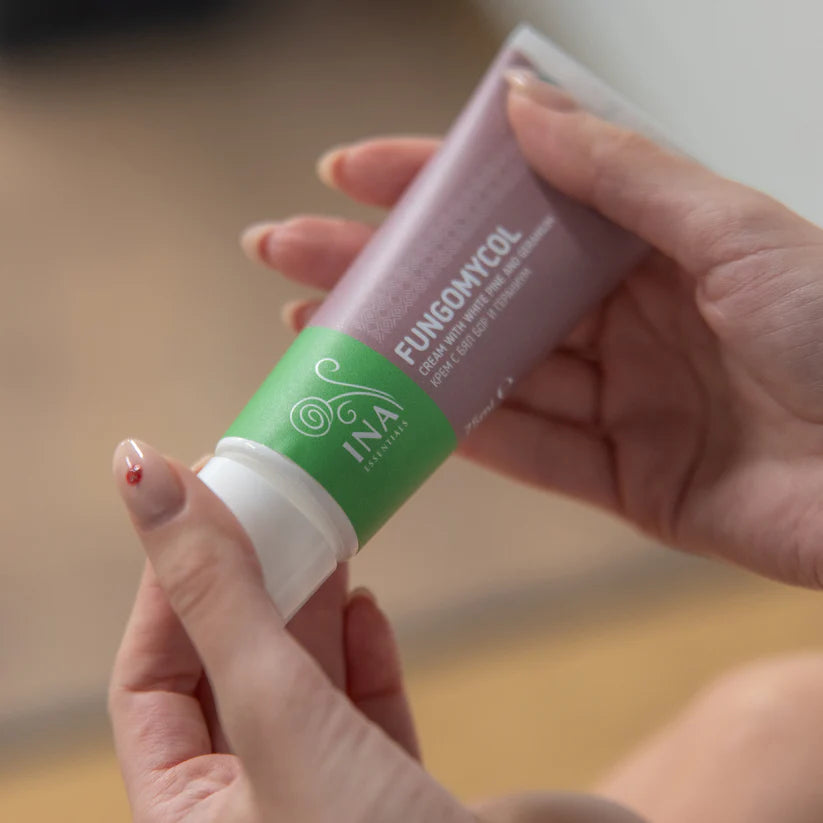
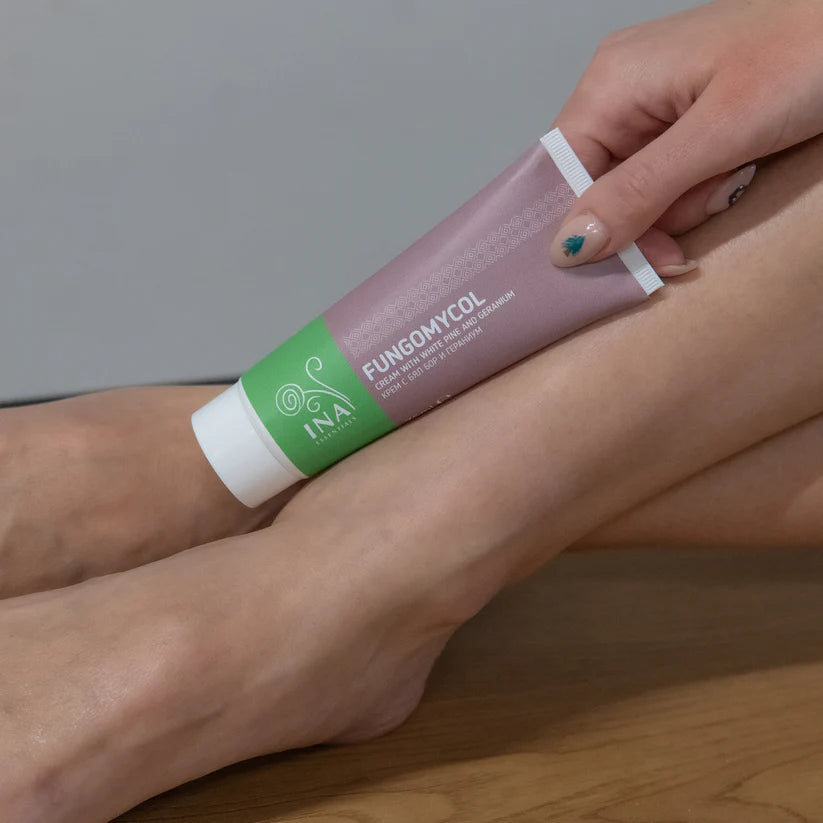
If you are looking for a tried-and-tested combination that draws its properties from the power of nature, discover the InaEssentials Nail & Dry Cracked Skin Care Cream (Fungomycol). It is both a natural solution for dry, cracked skin on the feet and a highly effective cream for cracked heels and elbows.
Together, this unique combination of natural ingredients provides lasting comfort and effective care, while also supporting the health of the nails and skin.


5. Natural solution and complete care: the InaEssentials story
Behind the brand InaEssentials lies the personal and inspiring story of a Bulgarian family who transformed their passion for organic farming into a mission to support people around the world. It all began in small family gardens, cultivated with hard work, love, and a deep respect for the land. Driven by a desire to offer clean and authentic solutions inspired by nature, the founders of InaEssentials committed to a closed production cycle — from planting the herbs on their own farm to the finished cosmetic product.

The brand's philosophy rejects the use of harsh chemicals and is founded on the authentic extraction of botanical benefits. Products such as the Fungomycol cream are proof that nature has given us everything we need to keep our bodies healthy and beautiful. By combining traditional herbal knowledge with modern, clean cosmetic standards, this family company delivers care that has earned the trust of customers in dozens of countries.
6. Frequently asked questions (FAQ)

*This article was created to provide useful, accessible information in line with natural cosmetic practices for foot skin care. The content is based on traditional herbal knowledge and the recognised properties of natural ingredients. The text is for informational purposes only and does not replace professional medical advice or diagnosis.